
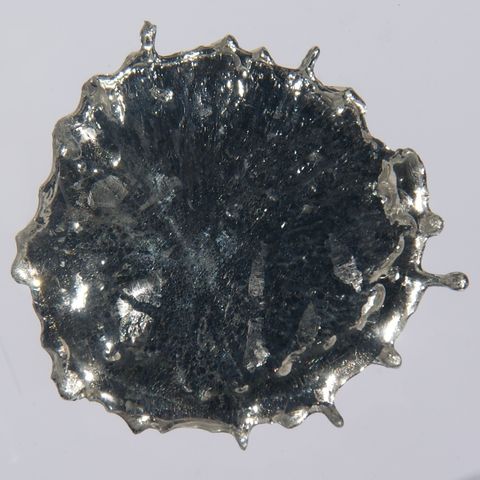
Tin (Sn)
“The Bronze Age’s secret partner of copper — five thousand years on, it still guards the milk can and joins the circuits of Bangladesh.”
How its electrons are arranged
Computed from the aufbau principle, with known real-world exceptions applied automatically.
The notes
Characteristics
- Configuration [Kr] 4d¹⁰ 5s² 5p²: a post-transition metal of Group 14, Period 5, p-block, with four valence electrons and both +2 and +4 oxidation states (SnO and ).
- Allotropy with drama: above 13.2 °C white β-tin is a normal lustrous metal, but under lasting cold it crumbles into powdery grey α-tin — the decay called “tin pest”.
- It shrugs off water and mild acids, so a whisper-thin coat of tin keeps steel food cans safe for years on the shelf.
- It melts at only 232 °C and bends with the crackling “tin cry” — safe and pleasant to handle, yet it never occurs free in nature.
A soft, silvery-white metal with a faint yellow sheen, easily bent by hand or rolled into foil. Bend a bar and it crackles — the famous “tin cry”, the sound of twinned crystals slipping inside the metal.
Where you meet it
✦ Uses
- Tin-plating of steel food cans — the familiar “tins” of condensed milk, fish and fruit on Bangladeshi shop shelves.
- Solders for electronics, from the classic tin-lead to modern lead-free tin-silver-copper alloys that join every phone’s circuit board.
- Bronze (copper-tin) for bells, statues and coins; pewter tableware; and molten-tin baths on which window glass is floated perfectly flat.
- Stannous fluoride () in toothpaste against cavities, and organotin stabilisers that keep PVC pipes and plastics from crumbling in sunlight.
◍ Everyday examples
- A condensed-milk or canned-fish “tin” in a Bangladeshi kitchen is simply steel wearing a whisper-thin coat of tin.
- Inside TVs, phones and radios, components are joined by seams of tin-based solder.
- A bronze bell at a school or temple — and the classroom trick of bending a tin strip until it “cries”.
History & name
Tin has no lone discoverer: alloyed with copper it created bronze around 3000 BCE and gave a whole age of history its name. Ancient traders risked long sea voyages for the tin streams of Cornwall and the mines of the East, dealing in cassiterite () — the dense, black “tinstone” that is still tin’s only important ore. The symbol Sn descends from stannum, the Romans’ name for the metal.
Nearby elements
The elements that sit right beside this one on the table — often the closest chemical cousins.